
 Covid-19- Medical Devices
 Imaging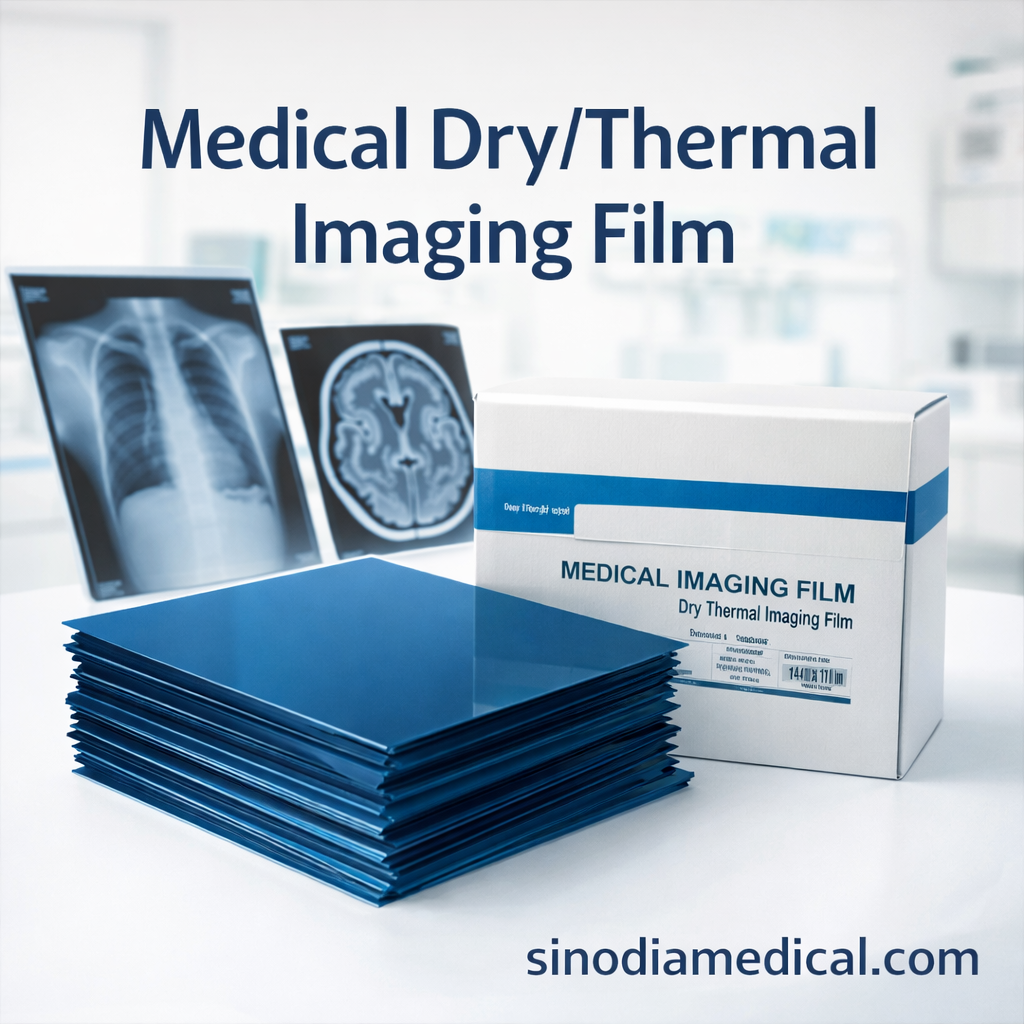
Description
I. Introduction to Medical Dry Film
II. General Technical Parameters
- Product features: This film is dry film, Direct thermal imaging. With less fog, high definition, high density, bright color, and convenient diagnosis
- Color: Blue
- Structure: Protective layers, Thermal sensitive layer, Film Base layer.
- Printing type: Direct digital thermal printing
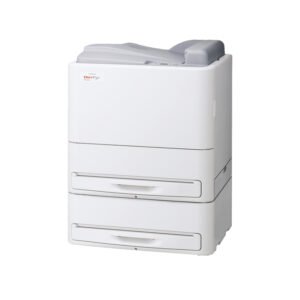
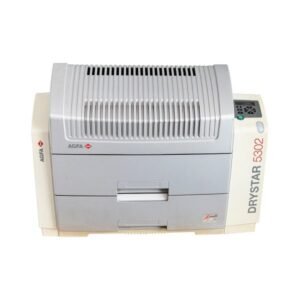
- Compatible printer: Thermal Printers: MD160, Fuji 2000/3500/Lite, Agfa DRYSTAR 5302, Agfa DRYSTAR AXYS, HuQ …
- Film Sizes: 8×10in, 10×12in, 11×14in, 14×17in
Structure of Thermal Film
One side of the PET base is coated with a Thermal-Sensitive layer and protective coating, while the opposite side has an anti-adhesion and anti-static backing layer.
(*) Thermal Film Parameter
- Blue PET base
- Imaging Technology: Direct – thermal imaging (dry printing, operating in a light-tolerant environment)
- Fog Density DO: ≤0.08
- Average slope G -: 1.9±0.4
- Sensitivity S: 15~50
- Max density Dmax ≥ 3.18
- Thickness 195μm
- Gray-scale Resolution: 14-bit
- Printing Color: Black and white
- Film Shelf Life: 24 months
- Apparent Quality: The film should be apparently clean and free from defects such as fingerprints, oil stains, spots, scratches, bubbles, coating peeling, wire drawing, streaks, and coating shedding.
- Printing Speed: 8in×10in: ≥90 sheets/hour, 14in×17in: ≥70 sheets/hour
Technical characteristics and properties of GE980 film are equivalent to those of GE970 film.
(*) GE970 film is for domestic sale within China only.
(*)GE980 film is intended for export (outside of China).
Specification package
| Size | Package | ||
|---|---|---|---|
| Imperial system
(inch, in) |
Metric system
(centimeter, cm) |
Sheets/Box | Boxes/Carton |
| 8 x 10 | 20 x 25 | 100 | 5 |
| 10 x 12 | 25 x 30 | 100 | 5 |
| 10 x 14 | 26 x 36 | 100 | 5 |
| 11 x 14 | 28 x 35 | 100 | 5 |
| 14 x 17 | 35 x 43 | 100 | 5 |
FAQ :
1. What precautions should be taken after opening the film?
After opening the film, use it promptly. First, avoid bending, friction, or heavy pressure—these can cause creases or cracks on the imaging surface. Additionally, never use the film in high-humidity environments, as moisture may make it stick and peel, ruining the image. Store it in a moderate humidity to prevent static marks, and always handle it with dry hands to avoid damage. Finally, keep it away from high temperatures to maintain optical clarity.
2. What are the advantages of thermal film vs. traditional film?
Thermal film offers three key benefits. First, it images in seconds—far faster than traditional film, which takes minutes. Second, it’s eco-friendly: no chemical development means zero polluting waste. While traditional film has high resolution, thermal film’s clarity meets most clinical needs. In fact, its special formulations can even enhance details in specific scenarios. Cost-wise, thermal film saves money: though slightly pricier, it eliminates chemical equipment and maintenance costs.
3. How compatible is the film with market printers?
We’ve rigorously tested our thermal film with all major medical printers—both imported and domestic brands. The result? Seamless compatibility. Whether you use a top-tier model or a budget option, expect sharp images, accurate colors, and zero blurring. No need to worry about setup—our film works right out of the box for reliable performance every time.
4. Why might film image quality suffer?
Here are the main culprits. First, printer settings like temperature or pressure might need calibration. Next, improper storage—such as heat, humidity, or sunlight—can degrade the film. Clogged printer nozzles are another common issue. While rare, film defects can occur, but our strict quality checks minimize this. If problems arise, start by checking storage and printer settings. Our tech team is always ready to help diagnose issues.


Reviews
There are no reviews yet.